

TICLT History
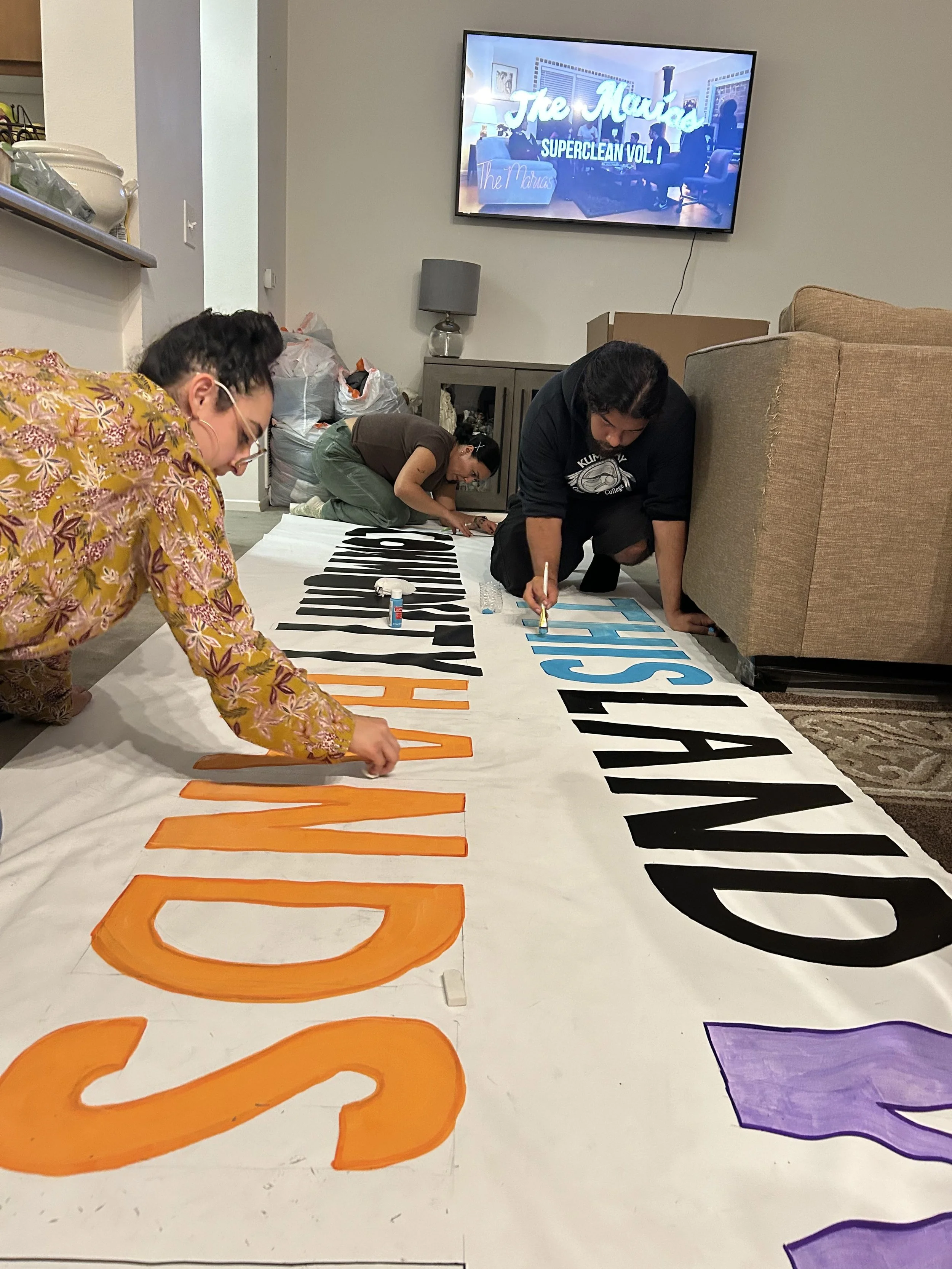
The community of Barrio Logan has long endured environmental racism, gentrification and displacement. In July 2022, Environmental Health Coalition (EHC) hosted a community workshop, where residents came together to speak about their experiences and discuss options to fight back. Residents and leaders quickly identified communal ownership of lands as a real solution. If we own the land, we can clean it up together, keep each other housed, and keep our businesses in place.
Using California Strategic Growth Council funding through a Transformative Climate Communities (TCC) Planning Grant, EHC stipended a group of 10 residents to meet weekly for one year to establish a method to implement communal land ownership. These community members worked together to establish the bylaws, create the Vision & Mission, pursue funding and ultimately incorporate Tierras Indígenas Community Land Trust (TICLT) as a non-profit. Eight of the original 10 community members became TICLT’s founding Board of Directors.
The Board continued to work as volunteers to apply as one of 11 partners, including EHC and lead applicant San Diego Foundation, to the TCC Implementation Grant. The proposal, “Rooted in Comunidad, Cultivating Equity,” was awarded a$22M grant in December 2023, funding green spaces, housing, transportation, community-led food production and other climate-resilient projects in San Diego’s central historic barrios. TICLT was allocated $4.1M of these funds to purchase our building, rehabilitate the housing units and commercial spaces, and staff up for three years. TICLT acquired our first property on 2606 National Avenue in December 2024, which now serves as affordable rental housing and a community space.
TICLT has since held a community clean up of the property, initiated rehabilitation plans for the onsite affordable housing, set up our offices and hosted community events. We are looking forward to establishing a governing board, organizing a tenant collective, building out a new office and art gallery, as well as partnering with Monarch Midwives to bring an indigenous-led midwifery clinic to Barrio Logan.
Community Land Trust Model
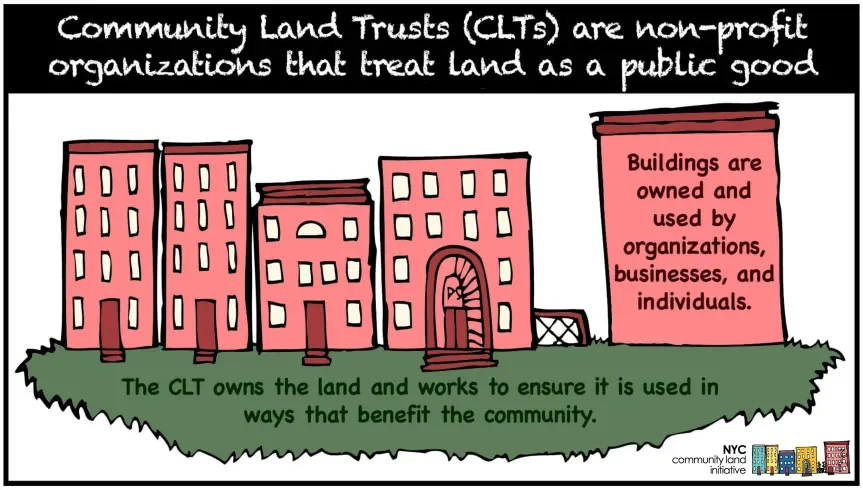
As defined by Grounded Solutions, community land trusts (CLTs) are “nonprofit organizations governed by a board of CLT residents, community residents and public representatives that provide lasting community assets and shared equity homeownership opportunities for families and communities. CLTs develop rural and urban agriculture projects, commercial spaces to serve local communities, affordable rental and cooperative housing projects, and conserve land or urban green spaces. However, the heart of their work is the creation of homes that remain permanently affordable, providing successful homeownership opportunities for generations of lower income families.”
Each CLT has a unique mission, it’s own values, and established bylaws that are designed to address issues that directly affect that particular community. A CLT has traditionally been used to promote racial, economic, and environmental justice, along with healing from decades of violence that have been perpetrated against marginalized groups. While every CLT differs in scope, a typical CLT for affordable housing works like this:
A family or individual purchases a house that sits on land owned by the community land trust.
The purchase price is more affordable because the homeowner is only buying the house, not the land.
The homeowners lease the land from the community land trust in a long-term (often 99-year), renewable lease.
The homeowners agree to sell the home at a restricted price to keep it affordable in perpetuity, but they may be able to realize appreciation from improvements they make while they live in the house.
Some CLTS, like TICLT, also focus on preserving affordable rental housing, creating urban green spaces and urban agriculture, as well as eco-restoration. Please see our Vision & Mission to learn more about TICLT’s specific focuses. Please see our Governance Structure to learn how we maintain community control, as we execute our Mission.
Please visit the California CLT Network, Grounded Solutions or NYC Community Land Initiative to learn more about CLTs.
Environmental Justice
Environmental justice is the right of all people and communities to live, work, and play in a clean and safe environment.
While Logan is a vibrant hub of Chicano culture, it is also one of the most polluted neighborhoods in California. For decades the city of San Diego has allowed polluting industries to operate right next to schools, homes, and parks. The freeway that splits Logan in half, toxic hotspots, and the neighboring Port of San Diego are major polluters attracting thousands of diesel-polluting trucks each month. Communities like Logan breathe “super” climate pollutants like fine particulate matter (PM2.5), diesel particulate matter (Diesel PM), and black carbon that cause higher rates of cancer, heart disease, and asthma while making climate change worse.
Living Conditions
Logan residents breathe at least 80% more diesel pollution than the rest of neighborhoods in California, with Barrio Logan breathing 99% more diesel pollution.
There is at least 50% more toxic chemical releases in Logan than the rest of California neighborhoods. In some parts of Barrio Logan the toxic releases are 94% higher than the rest of communities in the state.
With decades of divestment in parks and trees paired with a dense concentrations of pavement, buildings, and other heat retaining surfaces, Logan experiences urban heat island effect.
Damaging Our Health
Diesel pollution is known to cause cancer, contribute to premature death, hospitalizations and emergency room visits for worsening chronic heart and lung disease, asthma, and decreased lung function in children.
Diesel emissions causes 84% of the cancer risk from air pollution in Portside neighborhoods.
Portside residents have a higher risk of developing cancer from air toxins than 93% of the nation.
Barrio Logan’s rate of asthma‐related hospital visits is higher than 95% of census tracts throughout the state.
Communities suffering from air pollution are more vulnerable to the impacts of climate change like extreme heat or wildfires, because these events can make health conditions like asthma worse.
According to the EPA, urban heat island effect increases energy costs (e.g., for air conditioning), air pollution levels, and heat-related illness and mortality.
The Causes
Medium and heavy-duty trucks make up only 1% of all vehicles in San Diego County but emit 13% of all diesel particulate matter, and 15% of all oxides of nitrogen (NOx), a climate-change-causing emission, in the county.
On-road mobile sources are the second highest emitters of diesel particulate matter pollution in the Portside area, with heavy-duty trucks emitting the most in this group at 43%.
Air Toxic Hotspots are industries that expose residents and workers to elevated amounts of cancer-causing pollutants like Hexavalent Chromium, Nickle, and Diesel PM/exhaust. In Logan, there is concentration of three Hotspot facilities within a 1.5 mile radius - NASSCO, Pacific Ship and BAE.
Barrio Logan has 7% tree canopy compared to 13% citywide, and 23% in La Jolla. According to American Forests, a canopy cover of at least 43.3% is required to mitigate the impacts of urbanization and climate change in urban areas.
TICLT is working to acquire parcels to implement indigenous and sustainable practices to combat environmental racism and it’s resulting health hazards. Future plans include:
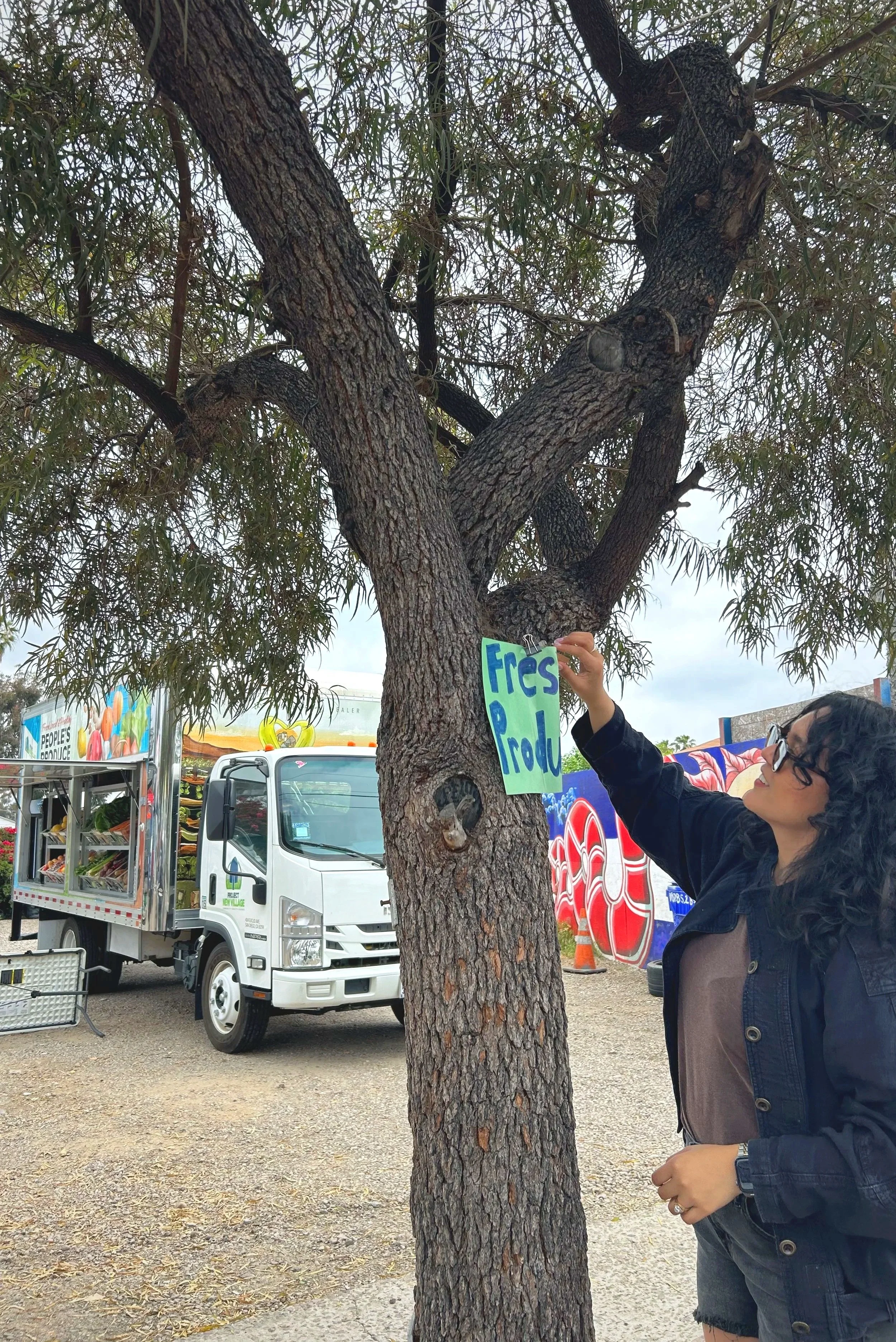
Acquisition of a parcel at 26th & Logan to remediate the soil and plant fruit trees to provide a food source to community while cleaning the air.
Advocacy for additional greenspace, as well as acquisition and creation of additional greenspaces.
Future plans to obtain site control of Chollas Creek-adjacent parcels and implement indigenous water purifying practices and native plantings.
Residential soil testing and remediation programs, coupled with gardening incubators for healthier soils, food sources and cleaner air.
Stay tuned for updates on the launch of our Eco-Restoration & Food Sovereignty Programming!